What is Cocoa Mass? 7 Essential Facts Every Chocolate Manufacturer Should Know
Cocoa mass is one of the most important ingredients in chocolate manufacturing. It serves as the foundation for a wide variety of chocolate products and cocoa derived ingredients, including cocoa butter and cocoa powder.
Although the terms cocoa mass, cocoa liquor, and cocoa paste are sometimes used interchangeably, understanding what it is and how it is produced can help food manufacturers, importers, and product developers select the right cocoa ingredient for their applications.
In this guide, we explain what cocoa mass is, how it is made, its characteristics, industrial applications, and how it differs from other cocoa ingredients.
What is Cocoa Mass?
Cocoa mass, also known as cocoa liquor, is a pure cocoa ingredient produced by grinding roasted cocoa nibs into a smooth, semi liquid paste.
Despite the term liquor, it contains no alcohol. The name refers to its fluid consistency when warm due to the natural cocoa butter present in the cocoa beans.
It contains 100% cocoa solids and cocoa butter, making it the primary raw material for chocolate manufacturing.
How is Cocoa Mass Produced?
The production process involves several stages.
1. Harvesting
Ripe cocoa pods are harvested, and the cocoa beans are removed.
2. Fermentation
The beans are fermented for several days to develop chocolate flavor precursors.
3. Drying
Fermented beans are dried to reduce moisture content for safe storage.
4. Roasting
Roasting enhances aroma and flavor while improving food safety.
5. Winnowing
The shell is removed, leaving cocoa nibs.
6. Grinding
The nibs are finely ground until the natural cocoa butter melts, producing a smooth cocoa liquor.
What is Cocoa Mass Made Of?
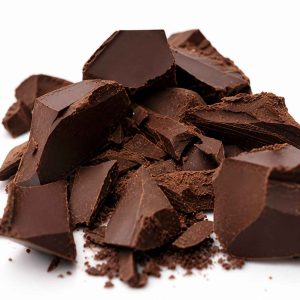
Cocoa mass naturally contains:
| Component | Typical Content |
|---|---|
| Cocoa Butter | Approximately 50–58%* |
| Cocoa Solids | Approximately 42–50%* |
| Moisture | Typically below 3%* |
*Values vary depending on cocoa bean variety, origin, and processing conditions.
Cocoa Mass vs Cocoa Powder
Many people confuse cocoa mass with cocoa powder.
| Cocoa Mass | Cocoa Powder |
|---|---|
| Contains cocoa butter | Most cocoa butter removed |
| Semi-solid at room temperature (depending on temperature and fat content) | Fine dry powder |
| Used for chocolate production | Used in beverages, bakery, dairy, confectionery |
| Rich mouthfeel | Lower fat content |
Cocoa Mass vs Cocoa Butter
Cocoa butter is extracted from cocoa mass through mechanical pressing.
| Cocoa Mass | Cocoa Butter |
|---|---|
| Contains cocoa solids | Pure cocoa fat |
| Brown color | Pale yellow color |
| Chocolate flavor | Mild cocoa aroma |
| Used to manufacture chocolate | Used for chocolate, confectionery, cosmetics, and pharmaceuticals |
Industrial Applications
This ingredient is widely used in:
Chocolate Manufacturing
- Dark chocolate
- Milk chocolate
- Compound chocolate
Bakery
- Premium chocolate fillings
- Brownies
- Cakes
Confectionery
- Chocolate coatings
- Ganache
- Truffles
Ice Cream & Dairy
- Chocolate ice cream
- Chocolate milk
- Dairy desserts
Key Benefits
Food manufacturers choose this cocoa ingredient because it offers:
- Rich chocolate flavor
- Natural cocoa aroma
- High cocoa content
- Smooth texture
- Consistent quality
- Versatile industrial applications
How to Choose a High Quality Product
When evaluating a cocoa ingredient, buyers should consider:
- Cocoa bean origin
- Flavor profile
- Cocoa butter content
- Moisture level
- Microbiological quality
- Heavy metal compliance
- Particle fineness
- Food safety certifications
A reliable supplier should also provide a Certificate of Analysis (COA) for each production batch.
Storage Recommendations
For optimal quality, the product should be stored:
- In a cool, dry environment.
- Away from direct sunlight.
- In clean, odor free storage areas.
- In sealed food grade packaging.
Because it contains a high proportion of cocoa butter, it softens or melts as temperatures rise. In warm climates, temperature-controlled storage may be required to maintain its physical form.
Why Cocoa Mass Matters in Chocolate Manufacturing
The quality of this ingredient has a direct influence on:
- Chocolate flavor
- Texture
- Mouthfeel
- Processing efficiency
- Final product consistency
Selecting a high quality product helps manufacturers produce premium chocolate products while maintaining stable production performance.
Conclusion: What is Cocoa Mass?
This cocoa ingredient is the essential building block of chocolate manufacturing. Produced by grinding roasted cocoa nibs, it naturally contains both cocoa solids and cocoa butter, providing the rich flavor and texture expected in chocolate products.
Understanding its composition, production process, and applications enables food manufacturers to choose the right cocoa ingredient for their formulations and maintain consistent product quality.
Frequently Asked Questions About Cocoa Mass
Is cocoa mass the same as cocoa liquor?
Yes. In the chocolate industry, cocoa mass and cocoa liquor generally refer to the same ingredient: ground cocoa nibs containing both cocoa solids and cocoa butter.
Does it contain alcohol?
No. Despite the name “cocoa liquor,” it contains no alcohol.
Can it be used to make chocolate?
Yes. It is the primary ingredient used to manufacture dark, milk, and specialty chocolates.
What is the difference between cocoa mass and cocoa paste?
The terms are often used interchangeably in industry, although some manufacturers use “cocoa paste” as a commercial or regional term for cocoa mass.
Is it healthy?
Cocoa mass naturally contains cocoa flavanols, minerals, cocoa butter, and dietary fiber. The nutritional profile of finished products depends on formulation and processing.
Looking for a Reliable Cocoa Mass Supplier?
Jaya International Group supplies premium cocoa ingredients for food manufacturers, distributors, and importers worldwide.
We supply:
- Cocoa Mass
- Natural Cocoa Powder
- Alkalized Cocoa Powder
- Cocoa Butter
- Cocoa Cake
Contact our team to request product specifications, Certificates of Analysis (COA), or discuss your sourcing requirements.
References
- International Cocoa Organization (ICCO) – Industry terminology and cocoa processing information.
- Codex Alimentarius Commission. Standard for Chocolate and Chocolate Products (CXS 87-1981).
- Codex Alimentarius Commission. Standard for Cocoa Powders (Cocoa) and Dry Mixtures of Cocoa and Sugars (CXS 105-1981).
- Beckett, S. T. Industrial Chocolate Manufacture and Use. Wiley-Blackwell.
- Afoakwa, E. O. Chocolate Science and Technology. Springer.
